Perusta sinäkin oma Blogaaja.fi blogi ilmaiseksi >>
Lainaa.com

AI Receptionist Simplifying Business Communication with Voice AI

Introduction

This is where the AI Receptionist is making a significant impact. Powered by advanced Voice AI technologies, AI receptionists automate communication processes, answer customer inquiries, route calls intelligently, and provide support around the clock. By streamlining communication workflows, businesses can improve efficiency while delivering superior customer experiences.

An AI Call Assistant can handle routine interactions, schedule appointments, and provide instant support without requiring human intervention. Automated AI Phone Call management reduces wait times, minimizes errors, and allows teams to focus on more strategic tasks. According to many AI Receptionist Reviews, organizations that adopt AI-powered communication systems experience improved productivity, reduced operational costs, and enhanced customer satisfaction.

Understanding AI Receptionists 

How AI Receptionists Work

An AI receptionist is basically a virtual assistant, but it’s made specifically for voice-based communication and powered by artificial intelligence technologies.


When a caller starts an AI phone call, the system listens to the spoken language, analyzes it pretty much right away. It figures out what the caller is trying to do, processes the request, and then replies with an appropriate message in real time.

AI Call Assistant and Automated Voice Systems

The AI call assistant is basically the core engine behind most modern AI receptionist platforms.


Automated voice systems remove a lot of repetitive communication tasks, but they still maintain a consistent service level. When the system handles basic interactions on autopilot, businesses can increase communication efficiency ,and reduce the constant pressure on customer service teams. 

Core Technologies Behind Voice AI Communication

Machine Learning and Predictive Analytics 

Machine learning is kinda the core thing, it lets a voice AI receptionist grab patterns from earlier conversations and over time it gets more solid step by step . Like it slowly figures out the cadence, not all at once, but yeah it adapts. 

When it listens to a customer talk it can spot familiar behavior , then predict what might come next. After that it fine tunes the answer it gives, and that’s why the whole interaction often feels more refined, also honestly a bit more human too. Even if call volume gets heavy , you still kinda feel that smooth flow even when everything is moving fast. 

Predictive analytics also supports service quality, because it can guess which questions are most likely. Then it suggests sensible solutions before the issue fully shows up, more like a quiet early indicator than anything loud, no panic-ish panic vibes, just managed anticipation. 

Voice Recognition and Security Systems 

Voice recognition helps the back-and-forth sound natural, but it also adds real security value, not only the marketing kind. 

An AI receptionist can verify a person using distinctive vocal characteristics, so authentication feels less of a hassle , while sensitive details stay protected in a steady, consistent way . 

In areas like finance , healthcare, and telecommunications , voice based defense is a big deal. It brings convenience , without letting strict protection baselines slip. 

Cloud-Based Communication Infrastructure 

Cloud tech gives modern voice AI communication systems the reach and flexibility they need. 

With cloud based AI receptionists, organizations can juggle a ton of calls at the same time, without putting as much money into on site hardware and installation. Teams can scale the response load faster, and still keep things stable, dependable, and pretty steady too. 

Cloud platforms also make remote access easier, support live updates, and make integration with other business systems less painful, which matters more than most people admit. 

Key Features of AI Receptionist Systems 

Automated Call Routing 

AI receptionists can read the caller’s intent  then route the call automatically to the right department  or straight to the correct staff member. 

This cuts down on useless transfer loops, and it helps customers reach support sooner. Automated routing can improve call response times, and in a lot of cases it lines up with better customer satisfaction , kind of around the same moment. 

AI Phone Call Management 

AI phone call management covers a bunch of conversation tasks using a mostly automated approach. 

The AI call assistant keeps a consistent tone, and it answers with relevant information , not the try stuff see what happens random guessing vibe. 

When companies automate how calls are handled, they also reduce admin workload, and day to day service feels more even, in real life. 

Real-Time Data Processing and Analytics

AI receptionists deliver practical signals through real time data handling , and analytics that feel almost immediate. 


These insights help the teams make more accurate next steps, and they keep adjusting the service over and over, kind of like a feedback loop that gets even tighter after each cycle. 

How AI Receptionists Simplify Business Communication

Smart Call Routing and Efficient Support

One of the most significant advantages of AI receptionists is intelligent call routing.

The system analyzes customer intent and directs calls appropriately without requiring multiple transfers. Customers reach the correct department faster, reducing frustration and improving satisfaction.

Automated Workflow and Task Management

AI receptionists simplify internal workflows by automating repetitive administrative tasks.

Automation reduces manual effort and ensures consistency across communication processes.

Employees can focus on higher-value activities while AI systems handle routine responsibilities.

Proactive Follow-Ups and Notifications

AI receptionists can automatically send reminders, updates, confirmations, and follow-up notifications. This proactive communication helps businesses stay connected with customers and maintain engagement.

Timely notifications improve customer satisfaction while reducing missed appointments and service interruptions.

Benefits of AI Receptionists for Businesses

Reduced Operational Costs

Managing customer communication traditionally requires significant staffing and infrastructure investments.

AI receptionists reduce operational costs by automating routine communication tasks and minimizing the need for additional personnel.

Businesses can handle larger communication volumes without proportional increases in expenses.

24/7 Customer Communication Support

AI receptionists provide continuous availability, ensuring customers can access information and assistance at any time.

Continuous support improves customer satisfaction and prevents missed opportunities.

Scalability for Business Growth

AI receptionists can scale effortlessly to handle growing call volumes and customer interactions. Businesses can expand communication capabilities without major infrastructure changes or staffing increases.

This flexibility makes AI receptionists valuable assets for businesses of all sizes.

Industry Applications of AI Receptionists 

Retail and E-Commerce 

Retail and e-commerce rely heavily on customer communication. Automated support improves the customer experience , and it also raises everyday operational efficiency. 

Retailers can respond faster, which helps build stronger loyalty. Since speed and clarity really count, customers notice when things feel quick and organized , like their time is actually being respected in a real way. 

Telecommunications 

Telecommunications companies deal with massive numbers of customer interactions every day, it’s basically nonstop. It’s one of those environments where delays stack up quickly , and then everything starts feeling slower than it should. 

Automation boosts communication efficiency and helps telecom providers deliver better service. Customers get faster resolutions, plus more convenient support options, which is what most people actually want. 

Travel and Hospitality 

Travel and hospitality depend on responsive communication. That’s just the way it is. 

Voice AI can improve service quality while reducing operational complexity , so businesses don’t have to juggle as many moving pieces all at once. 

Challenges in Implementing AI Receptionists

Integration with Existing Systems

Successful implementation requires integration with existing business systems.

Careful planning ensures smooth integration and maximizes return on investment.

Proper implementation is critical to long-term success.

Data Privacy and Security Concerns

AI receptionists process sensitive customer information.

Businesses must implement robust security measures, including encryption, authentication controls, and compliance monitoring, to protect data privacy.

Future Trends in AI Receptionist Technology

Hyper-Personalized Business Communication

Future AI receptionists will deliver highly personalized communication experiences.

By analyzing customer behavior, preferences, and interaction histories, AI systems will tailor responses to individual needs.

Hyper-personalization improves engagement, strengthens customer relationships, and enhances satisfaction.

Autonomous AI Communication Management Systems

The next generation of AI receptionists will operate with greater autonomy.

Future systems will independently manage communication workflows, handle inquiries, schedule appointments, and coordinate follow-up activities without human involvement.

  1. Conclusion

Overall, the AI Receptionist is reshaping business communication , smoothing customer interactions powered by advanced Voice AI technology. By handling routine communication chores , improving call routing, and enabling more tailored support, AI receptionists help companies respond faster and communicate more effectively, pretty much “as simple as that” in the best cases .

A smart AI call assistant, paired with an automated AI phone call management system can reduce operating costs , deliver 24/7 coverage, and stay useful as the business expands. And based on a lot of AI Receptionist Reviews , companies that roll out AI-driven communication solutions often see higher customer satisfaction, better productivity, and stronger operational results , all inside one connected setup. 
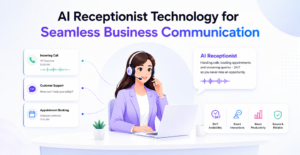
AI Receptionist Explained: Everything Business Owners Need to Know

Introduction

Missed calls can cost businesses valuable customers, appointments, and revenue. Whether it’s after business hours, during peak call volumes, or when staff members are busy assisting customers, every unanswered call represents a potential lost opportunity.

This challenge has led many businesses to explore AI Receptionist as a smarter way to manage customer communication. Powered by advanced conversational AI, these virtual receptionists can answer calls, engage with customers naturally, schedule appointments, qualify leads, and transfer important calls to the right team members—all without human intervention.

In this guide, we’ll explain what an AI receptionist is, how it works, its key benefits, common use cases, and why more businesses are adopting AI-powered call handling solutions.

What Is an AI Receptionist?

An AI receptionist is a virtual phone assistant that uses artificial intelligence, natural language processing (NLP), and voice technology to answer and manage incoming calls automatically.

Unlike traditional automated phone systems that rely on rigid menu options, AI receptionists can understand natural speech, hold conversations, answer questions, collect information, and perform tasks based on customer requests.

For example, when a customer calls a business, an AI receptionist can:

  • Greet the caller professionally
  • Understand the reason for the call
  •  Answer common questions
  • Schedule appointments
  • Qualify sales leads
  • Route calls to the appropriate department
  • Send confirmations via email or SMS
  • Capture customer information for follow-up

The goal is to provide a seamless customer experience while reducing the workload on human staff.

How Does an AI Receptionist Work?

An AI receptionist combines several advanced technologies to handle conversations effectively.

1. Call Reception

When a customer calls your business, the AI Call Assistant answers instantly, ensuring no call goes unanswered.

2. Speech Recognition

The system converts the caller’s spoken words into text using automatic speech recognition (ASR).

3. Natural Language Understanding

Artificial intelligence analyzes the customer’s request, identifies intent, and determines the best response.

4. Conversational Response

The AI generates a relevant response and speaks naturally to the caller using realistic voice technology.

5. Task Execution

Based on the conversation, the AI can:

  • Schedule appointments
  • Update CRM records
  • Transfer calls
  • Send notifications
  • Create support tickets
  • Collect lead information

6. Conversation Summary

After the call ends, the system can automatically generate summaries and store conversation details for future reference.

Key Features of an AI Receptionist

Modern AI receptionists offer much more than simple call answering.

24/7 Availability

Customers can reach your business at any time, including evenings, weekends, and holidays.

Appointment Scheduling

AI receptionists can access calendars, check availability, and book appointments without human assistance.

Lead Qualification

The system can ask pre-defined questions to identify high-quality prospects before forwarding them to sales teams.

Call Routing

Calls can be automatically directed to the appropriate employee or department.

Live Call Transfer

When human intervention is needed, the AI can transfer callers to available team members.

CRM Integration

Customer information can be automatically synced with CRM platforms to improve record management and follow-up processes.

Multilingual Support

Many AI receptionists can communicate with customers in multiple languages, helping businesses serve diverse audiences.

Call Analytics and Reporting

Business owners can access insights such as call volume, call duration, missed opportunities, and customer interaction trends.

Benefits of Using an AI Receptionist

Never Miss Important Calls

One of the biggest advantages is ensuring every incoming call receives an immediate response.

Potential customers often contact multiple businesses before making a decision. Responding instantly can significantly improve conversion rates.

Reduce Operational Costs

Hiring and training receptionists can be expensive, especially for businesses that require coverage outside standard business hours.

An AI Phone Callt provides continuous support without the costs associated with additional staffing.

Improve Customer Experience

Customers appreciate fast responses and efficient service.

AI receptionists eliminate long hold times and provide consistent support across every interaction.

Increase Appointment Bookings

Businesses that rely on appointments can benefit from automated scheduling that allows customers to book services at their convenience.

Scale Without Additional Staff

As call volume grows, AI receptionists can handle multiple conversations simultaneously without affecting service quality.

Free Up Employee Time

Instead of spending time answering repetitive questions, employees can focus on higher-value activities such as sales, customer service, and business growth.

Industries That Benefit from AI Receptionists

Healthcare

Medical practices use AI receptionists to schedule appointments, answer patient inquiries, and manage after-hours calls.

Real Estate

Real estate agencies can capture buyer and seller inquiries, qualify leads, and schedule property viewings automatically.

Legal Services

Law firms use AI receptionists to collect case information, answer common questions, and schedule consultations.

Home Services

Plumbing, HVAC, electrical, and cleaning companies can ensure every service request receives immediate attention.

Insurance

Insurance agencies can manage policy inquiries, collect customer details, and route calls efficiently.

Financial Services

Banks, lenders, and financial advisors can improve customer support while reducing administrative workload.

Recruitment Agencies

Recruiters can screen candidates, answer inquiries, and schedule interviews through AI-powered call automation.

AI Receptionist vs Traditional Receptionist

Feature AI Receptionist Traditional Receptionist
Availability 24/7 Business Hours
Scalability Unlimited Calls Limited Capacity
Cost Efficiency Lower Ongoing Costs Higher Staffing Costs
Response Time Instant May Vary
Appointment Scheduling Automated Manual
Lead Qualification Automated Manual
Consistency Always Consistent Varies by Staff

Rather than replacing employees entirely, many businesses use AI receptionists to handle routine tasks while allowing human staff to focus on complex customer interactions.

Common Misconceptions About AI Receptionists

“AI Sounds Robotic”

Modern conversational AI has evolved significantly. Today’s AI receptionists can communicate naturally and maintain human-like conversations.

“Customers Prefer Humans”

While some situations require human support, many customers simply want quick and accurate answers. AI receptionists provide immediate assistance without waiting on hold.

“AI Is Only for Large Businesses”

AI receptionists are increasingly accessible for small and medium-sized businesses looking to improve customer service and reduce operational costs.

“Implementation Is Complicated”

Most modern AI receptionist platforms offer simple setup processes and integrations with existing business systems.

How to Choose the Right AI Receptionist

When evaluating AI receptionist solutions, consider the following:

Conversation Quality

Choose a platform that provides natural, human-like conversations.

Customization Options

Look for the ability to customize greetings, workflows, scripts, and call routing rules.

Integration Capabilities

Ensure compatibility with your CRM, calendar, helpdesk, and communication tools.

Reporting Features

Detailed analytics can help identify opportunities to improve customer service and business performance.

Scalability

Select a solution that can grow alongside your business.

Why Businesses Are Turning to AI Receptionists

Customer expectations continue to rise. People expect businesses to be available, responsive, and efficient at all times.

An AI Call Centre helps organizations meet these expectations by providing instant support, capturing every opportunity, and streamlining communication processes.

As AI technology continues to improve, virtual receptionists are becoming an essential tool for businesses seeking better customer experiences, increased efficiency, and sustainable growth.

Conclusion

An AI receptionist is more than just an automated answering service. It serves as a smart communication assistant that can answer calls, schedule appointments, qualify leads, route conversations, and support customers around the clock.

For businesses looking to reduce missed opportunities, improve customer service, and operate more efficiently, adopting an AI receptionist can deliver measurable benefits while supporting long-term growth.

AI Receptionist Technology for Seamless Business Communication

Introduction 

This is where AI Receptionist technology is transforming business communication. By combining artificial intelligence, automation, and advanced voice technologies, AI receptionists help organizations streamline customer interactions while improving service quality. These intelligent systems can answer calls, manage inquiries, schedule appointments, and provide support around the clock.

Modern solutions such as the AI Call Assistant and automated AI Phone Call management systems are helping businesses improve communication efficiency while reducing operational costs. Many AI Receptionist Reviews highlight how these technologies enhance customer experiences and create more productive workflows.

Understanding AI Receptionist Technology 

How AI Receptionists Work

An AI receptionist is basically a virtual communication helper, powered by artificial intelligence and machine learning too , you know , in general 

So when someone makes an AI phone call , the system listens, figures out what the caller wants to do , and then crafts replies that match what’s happening .AI receptionists can sound more natural, and they can keep a little context, even if it’s not always perfect , I mean I’m not gonna pretend 

AI Call Assistant and Automated Voice Systems

The AI Call Assistant usually plays the main “brain” role inside a lot of AI communication platforms 

It can handle things like :

Answering customer questions 

Scheduling appointments 

Managing reservations 

Sending reminders 

Running follow up communication 

Sharing account details 

Triage service requests 

Automated voice systems help businesses take more calls while staffing stays the same . Customers get help right away , and organizations can keep service quality steadier instead of it swinging depending on who’s on shift , right then 

Integration with Business Communication Platforms

Most current AI receptionist systems connect to the tools businesses already use 

Common connections include :

CRM platforms 

Scheduling software 

Customer support systems 

VoIP phone networks 

Messaging applications 

Core Technologies Behind AI Receptionists 

Automatic Speech Recognition (ASR)

Automatic Speech Recognition, or ASR , helps AI systems turn spoken language into text 

So it supports AI receptionists understanding conversations more clearly, and then replying in a way that fits the moment . 

Machine Learning and Predictive Analytics

Machine learning helps AI receptionists improve over time, because the system adjusts based on conversation outcomes 

Predictive analytics shows up too , so businesses can anticipate what customers might need, and handle issues earlier before they turn into bigger trouble 

Cloud Based Communication Infrastructure

Cloud tech adds flexibility , plus scalability is what modern communication systems actually require. 

Cloud based AI receptionist platforms usually bring benefits like :=

Remote access 

Real time updates 

Elastic scaling 

Lower infrastructure costs 

Better reliability 

Key Features of AI Receptionist Systems 

Automated Call Routing

An AI receptionist can interpret caller intent, and route calls automatically to the right department, representative , or specialist . This reduces unnecessary transfers, and it lowers customer frustration, because nobody gets passed around endlessly. 

AI Phone Call Management

AI phone call management automates a bunch of communication tasks 

Common examples include :

Appointment scheduling 

Reservation confirmations 

Service reminders 

Customer notifications 

Follow up calls 

Information requests 

The AI Call Assistant usually runs these tasks in a steady way, and it tends to stay accurate , which lowers admin load, and improves service reliability.

Multichannel and Multilingual Support

Many platforms also include multilingual support, so organizations can serve different customer groups more effectively .

How AI Receptionists Enable Seamless Communication

Automated Workflow and Task Management

AI receptionists streamline business operations by automating repetitive communication tasks.

Routine activities such as appointment scheduling, inquiry processing, ticket creation, and information collection can be handled automatically. This reduces manual effort while improving consistency and accuracy.

Personalized Customer Interactions

AI receptionists use customer data, communication history, and behavioral insights to tailor interactions to individual preferences and needs. Personalized conversations help businesses build stronger relationships and improve customer satisfaction.

Proactive Follow-Ups and Notifications

AI-powered communication systems can initiate interactions rather than simply respond to inquiries.

Businesses can automate:

  • Appointment reminders
  • Service updates
  • Payment notifications
  • Follow-up surveys
  • Customer satisfaction requests

Benefits of AI Receptionists for Businesses

Enhanced Customer Experience

AI receptionists provide fast, reliable, and personalized support that meets modern customer expectations. Immediate responses and efficient service create positive impressions and strengthen customer relationships.

Increased Productivity and Efficiency

By managing routine communication tasks, AI receptionists free employees to focus on more complex responsibilities. Organizations can handle larger communication volumes without significantly increasing staffing requirements.

Scalability for Business Growth

AI receptionist systems can scale easily to accommodate larger customer bases and higher call volumes. Organizations can maintain service quality without proportional increases in operational costs.

Industry Applications of AI Receptionists

Banking and Financial Services

In banking and finance, AI receptionists handle account questions, appointment scheduling, transaction help ,and customer authentication too. Voice automation supports both security and service efficiency ,which is key when rules have to be followed ,and they generally do.

Healthcare and Medical Support

Healthcare organizations lean on AI receptionists for appointment scheduling ,patient reminders, inquiry management, and administrative assistance. Patients benefit because they can access info sooner, and healthcare providers get a little more breathing room on the operations side.

Retail and E-Commerce

AI receptionists can also manage seasonal demand shifts more smoothly ,instead of scrambling every time traffic spikes show up.

Telecommunications

Telecommunications providers deal with huge volumes of customer interactions. AI receptionists help with billing inquiries, technical support ,account management ,and service updates.

Travel and Hospitality

In travel and hospitality, AI receptionists assist with reservations ,booking confirmations, travel updates ,and guest support. Customers get immediate help during their journey, from before departure all the way to being on the ground ,and that usually raises satisfaction ,plus loyalty. 

Challenges in Implementing AI Receptionist Technology

Accuracy and Language Limitations

Complex conversations, regional dialects, industry-specific terminology, and language variations may occasionally affect performance. Ongoing training and optimization are necessary to maintain high accuracy levels.

Customer and Employee Adoption

Some individuals may initially hesitate to trust AI-powered systems. Organizations should provide education, training, and transparent communication about the benefits of AI technology.

Future Trends in AI Receptionist Technology

Advanced Conversational AI

Future AI receptionists will engage in increasingly natural and sophisticated conversations.

Advancements in conversational AI will improve contextual understanding, enabling systems to handle more complex customer inquiries with greater accuracy.

Emotion Recognition in Voice Systems

Emotion recognition technology will significantly enhance AI communication capabilities.

By analyzing vocal tones and speech patterns, AI systems will identify emotions such as frustration, urgency, or satisfaction. Responses can then be adjusted to provide more empathetic support.

Human-AI Collaboration

The future of business communication lies in collaboration between AI systems and human employees.

AI receptionists will manage routine interactions while human representatives focus on complex situations requiring empathy, creativity, and critical thinking.

Hyper-Personalized Customer Communication

Future AI systems will leverage advanced analytics and customer data to deliver highly personalized interactions.

Customers will receive tailored recommendations, proactive assistance, and communication that reflects their unique preferences and needs.

Autonomous AI Communication Management Systems

Next-generation AI receptionist platforms will become increasingly autonomous.

These systems will manage entire communication workflows, conduct follow-ups, resolve routine issues, and coordinate customer interactions with minimal human oversight.

Conclusion

An AI receptionist is shifting business communication by providing support that feels smooth, intelligent, and scalable for customers.


With machine learning, automatic speech recognition, cloud infrastructure, and advanced automation, AI receptionists help organizations respond faster, carry more personal conversations , and run customer service more efficiently overall. Options such as the AI Call Assistant and automated AI phone call systems can raise productivity, increase customer satisfaction, and reduce the operational hassle too. And as a lot of AI Receptionist Reviews also point out, businesses that roll out AI powered communication often see real improvements in both efficiency and wider service quality overall. 

Boost Productivity with a Smart AI Receptionist for Your Business

In today’s fast-paced business environment, every missed call can represent a missed opportunity. Whether it’s a potential customer looking for information, an existing client seeking support, or a prospect ready to schedule an appointment, businesses need to be available around the clock. However, maintaining a dedicated team to answer every inquiry is often costly and inefficient.

This challenge has led many organizations to adopt an AI Receptionist  as a smarter solution for managing customer communications. Powered by advanced Voice AI technology, modern reception systems can answer calls, qualify leads, schedule appointments, and provide instant responses without requiring human intervention. As businesses continue to embrace automation, AI-powered communication tools are becoming essential for improving productivity and customer satisfaction.

Why Businesses Are Turning to AI Receptionists

Customer expectations have evolved dramatically over the last few years. People expect quick responses, seamless communication, and personalized interactions regardless of the time of day.

An AI Receptionist Software solution helps businesses meet these expectations by ensuring every incoming inquiry is handled professionally. Unlike traditional voicemail systems, modern AI solutions engage callers in real-time conversations, understand intent, and take appropriate actions based on the customer’s needs.

From healthcare clinics and law firms to real estate agencies and service-based businesses, organizations are leveraging AI-powered receptionists to streamline operations and reduce administrative workloads.

How an AI Receptionist Improves Business Productivity

One of the biggest productivity problems businesses run into is dealing with all that repetitive communication stuff. Like, employees might spend a noticeable chunk of their day just answering standard questions, setting up meetings, and rerouting calls to the right place. It’s not that people don’t want to help, it’s just that a lot of the time it’s the same thing over and over.

That’s where an AI Call Assistant comes in. It can handle a bunch of those responsibilities in the background, so the team can shift toward higher-value work instead of getting stuck in the usual loop.

Some of the main productivity perks look like this:

  • Automatic call answering, 24/7
  • Quick lead qualification, right away
  • AI appointment booking, with no manual back and forth
  • Shorter call wait times
  • A smoother customer experience
  • Lower operational costs

When companies automate these kind of repeat processes, they can use their resources more wisely and, overall, run more efficiently.

The Role of Voice AI in Modern Customer Communication

The progress of Voice AI tech has kind of changed the way businesses deal with customers . Like, nowadays AI systems can decode natural language , notice context, and give back responses that sound fairly human, almost too much .  

Compared to the older phone setups that were stuck on strict menus and button picks, newer conversational bots can actually lead a person through a more real conversation.  

For instance, a dental clinic could use voice ai to tackle common questions, arrange appointments, mention office hours, and send urgent matters to the right path, fast enough . In the same breath, a real estate firm can use AI to screen incoming buyers before passing them off to an agent.  

That kind of automation lets companies keep a steady quality of service, while also lightening the load on staff .

AI Call Assistant: More Than Just Call Answering

Many people assume an AI Call Assistant simply answers phone calls. In reality, today’s systems offer much broader functionality.

Intelligent Lead Qualification

One of the most valuable capabilities is lead qualification. Instead of forwarding every caller to a sales representative, the AI can gather information, assess intent, and determine whether the caller meets predefined qualification criteria.

For example, a software company can use an AI assistant to ask questions about company size, budget, and requirements before scheduling a sales consultation.

This process ensures that sales teams spend their time speaking with qualified prospects rather than filtering inquiries manually.

Automated Appointment Scheduling

Scheduling appointments often involves multiple emails, phone calls, and calendar checks. An AI Appointment Booking system eliminates these inefficiencies by integrating directly with business calendars.

Customers can schedule, reschedule, or cancel appointments through a simple conversation, reducing administrative burdens and minimizing scheduling conflicts.

As a result, businesses can handle more bookings while improving customer convenience.

AI Phone Call Technology Is Changing Customer Expectations

Consumers seem to prefer quick help right away instead of waiting around for a callback, or trying to work through those complicated phone tree mazes . Modern AI Phone Call setups deliver immediate answers and still keep a pretty natural conversation tone going, so it feels less robotic, and more like a real person is listening. In the end, this leads to a smoother customer experience, and honestly it makes a business look more responsive and a bit more professional too.

And it doesn’t matter if someone is calling after hours , or if the phone lines are slammed during peak times, AI-powered systems can keep things moving so customers get help on time when they really need it. Plus, offering support around the clock has become a big deal especially for companies serving people across multiple time zones.

What Businesses Are Saying About AI Receptionist Solutions

As adoption grows, lots of organizations are sharing these good, real-world vibes after adding AI powered communication systems.  

One business owner said, kinda plainly:  

”After reading several AI Receptionist Reviews , we realized that Voice AI systems could manage appointment scheduling and customer calls far more efficiently than usual front desk workflows.”  

And that kinda points to a wider shift where companies look for bigger reach in customer engagement, but without really upping staffing costs too much.  

Also, the reason people keep talking about AI Receptionist Reviews is that there seems to be more confidence in the tech now across different industries.

The Evolution of the AI Call Centre

Traditional call centres have been dealing with staffing shortages, higher labor costs, and call volumes that swing around a lot for years. And honestly, it feels like it never fully settles. With the AI Call Centre model showing up, many organizations are finding ways to push back against those problems.  

Instead of leaning only on human agents, businesses can now blend AI driven automation and human know how. That means some of the work gets handled faster, while the people still stay in the right place.  

In a modern setup like this, AI systems take on the repeatable stuff, like:  

  • answering routine inquiries  
  • collecting customer information  
  • scheduling appointments  
  • processing basic requests  

Then human representatives can focus on the trickier chats that need empathy, discussion, or specialized understanding.  

Overall this mixed approach boosts efficiency, but it also keeps the service quality at a solid level.

Real-World Applications Across Industries

The versatility of AI-powered receptionist solutions makes them valuable across numerous industries.

Healthcare

Medical practices use AI receptionists to schedule appointments, answer common patient questions, and send reminders. This reduces administrative workload while improving patient access.

Legal Services

Law firms often receive large volumes of inquiries. An AI Receptionist can collect case information, screen potential clients, and schedule consultations.

Real Estate

Real estate agencies use Conversational Bots to qualify leads, answer property-related questions, and coordinate appointments between buyers and agents.

Home Services

Plumbing, HVAC, electrical, and cleaning companies benefit from automated scheduling and call management, ensuring no customer inquiry goes unanswered.

These practical applications demonstrate how AI technology can support businesses of all sizes.

Choosing the Right AI Receptionist Software

Not all solutions give you the same level of power , so businesses really ought to check a few things first before they pick an AI Receptionist Software platform. In particular, they should look at things like how well the system handles natural language, whether it can connect with appointment scheduling tools, and how smoothly it links into a CRM. Also, can it do smart call routing when calls come in, and does it offer solid reporting and analytics so managers aren’t guessing. Another point is scalability, like will it grow with the business as needs change later on.

On top of that, organizations should think about customization because a flexible setup can better match their own workflows, and even the kind of customer experience they want. When the choice is right, the platform turns into a useful add-on for the business, helping maintain steady service while also lowering day to day operational complexity.

The Future of Conversational Bots and Business Automation

As artificial intelligence keeps evolving, conversational bots are going to get more and more sophisticated, like sooner than we think. In the future, these systems should be able to offer even more personalized exchanges, deeper connections with business tools, plus extra predictive abilities.  

Organizations that move on this tech early might end up with a competitive edge, mainly because they can answer faster, create better customer experiences , and run their operations in a more efficient way.  

And honestly, when Voice AI, intelligent automation, and advanced analytics come together, it opens up fresh opportunities for teams to fine tune communication and push growth forward.

Conclusion

The modern business landscape kinda demands faster responses, better customer experiences, and also more operational efficiency. An AI Receptionist sort of tackles all three at once by automating everyday communication work while still keeping professional, conversational interactions, y’know.

From AI Appointment Booking and lead qualification, to more intelligent call handling and customer support, today’s AI Call Assistant  solutions are changing the way businesses handle customer communications. And as Voice AI technology keeps moving forward, companies that adopt AI Receptionist Software will be in a better place to scale operations improve service quality, and raise productivity.  

If a business is looking at automation as an option, buying a smart AI Receptionist is no longer just some small tech upgrade more like a strategic decision toward greater efficiency, better customer ties, and sustainable growth.

AI Receptionist Systems Smarter Calls, Better Results

Introduction

AI-powered communication solutions are transforming how businesses manage customer interactions. Through intelligent automation, voice recognition, and machine learning technologies, AI receptionists can answer calls, route inquiries, schedule appointments, and provide support without human intervention. Solutions such as the AI Call Assistant and automated AI Phone Call systems enable businesses to streamline operations while improving customer satisfaction.

According to many AI Receptionist Reviews, organizations that implement AI-driven communication systems often experience improved efficiency, reduced operational costs, and enhanced customer experiences.

Understanding AI Receptionist Systems

How AI Receptionist Systems Work

An AI Receptionist combines artificial intelligence, speech recognition, and automation technologies to manage customer communications effectively.

When a customer places an AI Phone Call, the system listens to the conversation, converts speech into text, analyzes customer intent, and generates appropriate responses. Unlike traditional automated systems that rely on fixed menus, AI receptionists can understand natural language and engage in dynamic conversations.

AI Call Assistant and Automated Voice Systems


An AI Call Assistant serves as the core communication engine behind many AI receptionist systems.

Automated voice systems can answer incoming calls, respond to customer inquiries, provide business information, schedule appointments, process requests, and transfer calls when necessary.

Integration with Business Communication Platforms

One of the most valuable features of AI receptionist systems is their ability to integrate with existing communication platforms.

Modern AI solutions connect with CRM software, helpdesk systems, cloud communication platforms, scheduling tools, and enterprise applications. This integration allows businesses to centralize customer information and automate workflows across multiple departments.

Core Technologies Behind AI Receptionist Systems

Natural Language Processing (NLP)

Natural Language Processing (NLP) enables AI systems to understand and interpret human language.

NLP allows an AI Receptionist to analyze customer requests, identify intent, and respond naturally during conversations. This technology makes interactions feel more human and improves communication effectiveness.

Machine Learning and Predictive Analytics

Machine learning helps AI systems continuously improve their performance.

By analyzing customer interactions and communication patterns, AI systems can identify trends and predict customer needs. Predictive analytics allows businesses to anticipate service demands, optimize support strategies, and improve operational efficiency.

Voice Recognition and Security Systems

Voice recognition technology adds an additional layer of intelligence and security to AI-powered communication systems.

AI receptionists can use voice biometrics to authenticate customers and verify identities during conversations. This improves security while creating more personalized support experiences.

Cloud-Based Communication Infrastructure

Cloud technology serves as the foundation of modern AI receptionist systems.

Cloud-based communication infrastructure allows businesses to access AI-powered services from any location while maintaining centralized management and data synchronization.

Key Features of AI Receptionist Systems

Intelligent Call Answering

A key capability of an AI receptionist is intelligent call answering.


AI systems can respond instantly ,so waiting time drops, and customers get help right away. Instead of sending callers through confusing phone mazes, people can speak naturally and get support without delay.

Automated Call Routing

Automated call routing directs incoming calls to the right team ,or to the best available representative match.


The system reviews customer intent, any prior conversation history, and service requirements before deciding where the call should go. This usually means fewer unnecessary transfers, so the caller reaches the right place sooner, without getting bounced around internal handoffs all day.

AI Phone Call Management

AI Phone Call management allows businesses to automate many routine communication tasks.

These tasks include appointment scheduling, order updates, service notifications, follow-up calls, and customer support inquiries. With assistance from an AI Call Assistant, organizations can manage large call volumes efficiently while maintaining high service standards.

Benefits of AI Receptionist Systems for Businesses

Enhanced Customer Experience

Customer experience is a major factor influencing business success.

An AI Receptionist improves customer experiences by providing instant support, accurate information, and personalized communication. Customers no longer need to wait for business hours or remain on hold for extended periods.

Increased Productivity and Efficiency

AI-powered communication systems automate repetitive tasks that would otherwise require human intervention.

Employees spend less time answering routine inquiries and more time focusing on complex customer issues and strategic activities. This improves productivity and enables businesses to operate more efficiently.

24/7 Customer Communication Support

Unlike human teams, AI receptionists can operate continuously without interruptions.

Customers can access support at any time, including evenings, weekends, and holidays. Continuous availability improves customer satisfaction and ensures that important inquiries are addressed promptly.

Scalability for Business Growth

AI receptionist systems can easily scale to handle higher call volumes and more customer interactions without requiring significant staffing increases. This scalability allows organizations to support growth while maintaining service quality.

Industry Applications of AI Receptionist Systems

Banking and Financial Services 

Banks and financial institutions use AI receptionists to manage customer inquiries, account support, transaction updates, and fraud alerts.

Voice authentication technologies improve security while providing customers with fast and convenient service experiences.

Healthcare and Medical Support 

Healthcare providers use AI receptionist systems to schedule appointments, send reminders, answer patient inquiries, and provide medical information.

Automation reduces administrative workloads while improving patient communication and engagement.

Retail and E-commerce 

Retail businesses rely on AI receptionists to manage customer support, order tracking, product inquiries, and return requests.

Automated communication systems improve response times and enhance the overall shopping experience.

Challenges in Implementing AI Receptionist Systems

Integration with Existing Systems

Integrating AI solutions with existing business systems can be challenging.

Organizations may need to update infrastructure, migrate data, and ensure compatibility with communication platforms and software applications.

Data Privacy and Security Concerns

AI receptionist systems process large amounts of customer information.

Businesses must implement strong security measures to protect sensitive data and comply with regulatory requirements. Encryption, access controls, and cybersecurity monitoring are critical components of a secure AI communication environment.

Accuracy and Language Limitations

Although AI technology continues to improve, some systems may still encounter challenges when processing accents, dialects, or complex conversational requests.

Continuous training and optimization help improve accuracy, but businesses should monitor system performance regularly to ensure high-quality customer interactions.

Future Trends in AI Receptionist Technology

Advanced Conversational AI

Future AI receptionist systems will deliver even more natural and intelligent conversations.

Advances in conversational AI will enable systems to understand context more accurately, maintain longer conversations, and provide highly relevant responses.

Emotion Recognition in Voice Systems

Emotion recognition technology will allow AI systems to analyze customer emotions during conversations.

By detecting frustration, satisfaction, or urgency, AI receptionists can adjust responses accordingly and provide more empathetic support experiences.

Hyper-Personalized Customer Communication

Future AI systems will use customer data, preferences, and behavioral insights to deliver highly personalized communication experiences.

Personalized interactions can improve engagement, strengthen relationships, and increase customer loyalty.

Autonomous AI Call Management Systems

The next generation of AI receptionists will manage entire communication workflows independently.

These systems will handle customer inquiries, scheduling, follow-ups, support requests, and operational tasks with minimal human involvement.

Conclusion 

The AI receptionist is shifting how businesses communicate, enabling smarter calls and better outcomes through more capable artificial intelligence. Choices like an AI Call Assistant, plus automated AI phone calling systems help companies elevate customer experiences, boost productivity, and streamline communication operations in a cleaner, more organized direction.


Also, as a few AI Receptionist Reviews point out, AI-driven communication platforms deliver real value: 24/7 help, better efficiency, scalable growth paths, and more personal customer engagement. 

Never Miss a Business Call Again with AI Receptionists

Introduction 

Honestly, in today’s competitive business world, every phone call feels like a big deal, even more than it should. One missed ring can turn into a lost client or a sales moment that slips right away… or it can just make a relationship feel a little colder. It doesn’t really matter if you’re running a small shop, a medical clinic, a legal practice, or even a restaurant , people still want quick answers and steady communication. The odd part is that classic phone setups, and those reception desks that are always busy, often can’t keep up, especially when call volumes keep rising, and rising again.

This is where an AI Receptionist starts to shift the whole story, because it uses artificial intelligence so you don’t overlook the important calls. Basically, an AI receptionist gives responses right away, handles questions, sets up appointments, and supports customers 24/7 no breaks, no delays. It automates communication but still sounds professional and human enough, so these AI receptionist tools are becoming a real business necessity across different industries. 

The Cost of Missed Business Calls 

Skipping a call isn’t just some tiny bother, it straight up punches your income, and it can really mess up customer trust, fast, like super fast. When someone can’t get through they usually bounce elsewhere, sometimes like right away. And for folks who already buy from you, it starts to feel a little sidelined, like they’re getting brushed off, because nobody answers the phone. So it stops being one awkward little moment ,and then it snowballs into lower satisfaction, plus weaker long-term staying power too.

For a company with a small crew, or honestly almost any business dealing with a ton of inbound calls, doing it all manually gets tiring really quick. During those hectic minutes staff might be tied up with someone in person, or stuck doing back office chores, and the phone just sits there, kind of left alone. Then an important caller hits voicemail, or it just stays there unprocessed, basically waiting forever.

An AI Receptionist helps because it picks up every incoming call immediately, not after a line starts building up, and not after that long stretch of dead air that nobody wants.


24/7 Availability for Customers 

One of the biggest perks of AI reception systems is that they’re available all day, every day. Traditional front desks take breaks, close during holidays ,and shut down when business hours end. AI systems don’t do that, not really, not even a little bit.

So if someone wants to call late, on a weekend, or during that “wait ,is my appointment tomorrow?” moment, they can. They can ask questions, book sessions, confirm hours, or get help whenever it fits their life. That steady access tends to boost customer satisfaction, and it makes it more likely that a simple question turns into an actual purchase.

When a business uses an AI call assistant, service stays dependable 24/7, which cuts down the chances of calls getting missed because someone didn’t pick up quickly enough.

Instant Response and Reduced Wait Times 

People today expect speed ,and they want it to feel kinda effortless. If callers hear long hold music, or they call and nothing happens for a minute or two, frustration starts fast , and honestly a lot of folks just… give up.

AI reception systems handle calls almost right away, so wait time gets smaller, and the whole customer experience usually improves a bunch. A good AI receptionist can greet people politely, understand what they need, and either fix the issue immediately, or send the call to the right team, without all that back and forth.

Also, AI can juggle more than one call at once. So even when it’s busy and pressure is up, businesses don’t have to keep stressing about jammed phone lines, or staff slowly burning out, not matter what. 

Automated Appointment Scheduling 

Doing scheduling the old way can basically drain staff time, and it might even trigger those tiny errors, here and there. If calendars don’t update fast enough, then you can get double bookings, or those confirmation messages that never really land.

AI receptionists reduce that load, because reservations, check-ins, and appointments can move in a smooth, automated loop like it’s always on.

Customers can set things up using voice prompts, or by walking through automated menus. The AI checks availability in real time, confirms right on the spot, then sends reminders by text , email , or notifications that give off those AI call style pings, you know the kind.

Usually this automation lowers no-shows, limits booking conflicts, and helps everything move more smoothly ,for both the business side and the client side.

Personalized Customer Interactions 

Modern AI systems feel different from those older phone menu mazes. AI receptionists can spot repeat customers, pull up earlier conversation notes, and reply in a way that feels more tailored, not generic.

For example, if a returning customer calls, the system can greet them by name, and mention details connected to earlier buys or previous appointments. It’s that level of personalization that makes customers feel genuinely seen , and it tends to build loyalty over time.

A bunch of companies bring this up in AI Receptionist Reviews, saying these systems help create stronger relationships while improving everyday efficiency at the same time ,too.

Managing High Call Volumes Efficiently 

Call surges keep showing up, especially during promotions, holidays ,or those peak service windows. Human receptionists can get overwhelmed, and even when they’re juggling several lines, some calls still slip through, no matter how hard they try.

An AI Call Assistant can take on high volumes all at once, without the service quality wobbling. AI systems can answer frequent questions, guide people to the correct place or department, collect customer details, and route urgent requests in the right way, fast.

This scaling keeps communication consistent when demand gets intense, so the phones don’t stall at the edges , and everything keeps moving nonstop. 

Integration with Business Systems

AI receptionists work best when they’re kinda linked in with other business systems, like Customer Relationship Management (CRM) software calendars, booking platforms, and communication tools too. Basically it’s way better when everything can kinda talk to everything, so the AI isn’t just guessing, or starting from zero every single time, you know ?

For instance, when a customer calls, the AI system can pull their profile instantly, appointment history, or even prior conversations. This makes it feel more seamless for the customer, and it also helps businesses keep records right , mostly automatically. An integrated AI Phone Call setup can also push reminders, manage follow ups, confirm payments, or even ask for customer satisfaction surveys, all without employees having to do it manually and over and over.

Reducing Operational Costs 

Hiring and training reception staff can get pretty pricey, especially when a business needs longer hours or runs several shifts. AI reception systems help lower those operating costs by automating the repetitive communication stuff people usually handle at the front desk. Now, AI doesn’t completely replace human employees, not really, but it does take a ton of pressure off the front desk team. Then staff can move toward higher-value work like customer service, sales, and relationship nurturing, while the AI handles routine questions, and call routing pretty consistently.

So overall, this mix of automation plus human support tends to create a smoother, more cost effective operation, instead of the whole “AI does everything” idea, which… well, usually doesn’t last. 

Human and AI collaboration 

The best businesses don’t really treat AI like a full replacement, more like a support layer, you know, a sort of go between in the middle of human work where it gets messy and a little chaotic. AI receptionists can chew through the repetitive parts quickly and with steadier accuracy, while people keep the phone conversations that turn complicated emotional, and a bit unpredictable, the ones where real empathy and judgment are basically the last word. When both are blended like that it starts to feel like automation efficiency plus the human warmth, so a company can keep delivering good customer experiences in a consistent way even when the call flow spikes like crazy.

Conclusion 

Missing business calls can quietly turn into lost revenue, lower customer satisfaction, and less room to grow. With an AI receptionist set up, businesses can stay connected by sending instant replies, offering 24/7 coverage, doing automated scheduling too, and building more personalized customer interactions. Things like AI call assistants, and AI phone systems help organizations move through conversations more smoothly and at the same time lift overall service quality. Then AI receptionist reviews, yeah a lot of them, tend to repeat the same core idea over and over: these AI powered reception setups help businesses cut expenses, respond faster, and strengthen client relationships.

Since customer expectations keep climbing, organizations that adopt AI reception tech can be better positioned to stay competitive, improve day to day operations, and make sure they don’t miss that one important call again. 

Let an AI Receptionist Run Your Front Desk Effortlessly

Introduction  

The front desk is kinda like the first, you know, real face of the business, the most seen spot where people tend to land. It sets the tone for the whole customer journey , it kinda tosses out answers, keeps appointments drifting along, and makes communication feel smoother between clients and your team. But yeah, a traditional front desk can get messy pretty fast once real pressure shows up. Like when calls pile up, visitors just drop in, and then the admin never, ever finishes. Then suddenly you get missed calls, slow replies , and those little slip ups that can knock customer satisfaction off balance pretty quick. It also ends up pulling down the overall business efficiency. so more organizations are leaning toward an AI Receptionist, to run that front desk almost without effort. With faster handling for each AI phone call, right there at the front line, AI tech is really reshaping how businesses operate.

How an AI Receptionist Takes Over Front Desk Stuff  

An AI Receptionist is basically a smart virtual setup that guides front desk conversations in an automated, steady way. It uses advanced AI to answer incoming calls, help visitors, schedule appointments, and cover standard questions without someone needing to jump in every single time.  

As an AI Call Assistant it’s trying to make sure no single moment of contact gets skipped or left behind. Each AI Phone Call gets picked up quickly , whether it’s during business hours, outside them , or those peak rush times where everything feels louder and more urgent.  

The AI receptionist can do stuff like: 

  • Answer incoming customer calls  
  • Route questions toward the right department  
  • Book and confirm appointments  
  • Share business information  
  • Handle frequently asked questions, plus support requests  
  • Run after-hours communication  

With that kind of automation, the front desk keeps moving without constant human checking. It reduces staff stress too, and it helps keep service quality more consistent than before, and honestly that part matters.

Getting Rid of Front Desk Bottlenecks and Delays  

One of the toughest issues with the classic front desk is the bottleneck effect, mostly because multitasking turns into this awkward jumble. Receptionists end up juggling calls, greeting visitors, scheduling appointments, and replying to emails all around the same moment. And that juggling creates delays, plus sometimes those tiny errors no one wants quietly appear.  

An AI Receptionist cuts through it, because it handles conversations right away, and it can juggle multiple things at once. Acting like an efficient AI Call Assistant , it can manage several AI Phone Call interactions in parallel , without losing the thread or forgetting key details.  

Like, while one caller is getting an appointment set, another person can get help immediately about business hours or maybe specific service details. The system processes each interaction cleanly, not half-there, not after the fact.  

So waiting time drops , missed opportunities decrease, and the front desk stays functional even when the day is packed, busy, and kind of chaotic-level.

Improving Customer Experience and Staff Productivity  

Customer experience kinda leans on, like how fast and professionally a business replies to questions. If the calls just sit there, or nobody picks up at all. It kinda leaves this bitter vibe , you know  

An AI Receptionist really helps customer satisfaction because every AI Phone Call gets handled right away, not after some long, fuzzy wait time. Then customers end up getting answers that feel quick, steady, and professional , without having to line up for human availability, which is honestly a big deal  

Meanwhile staff members benefit too, for real. Instead of getting buried under repetitive chores, they can put their energy toward higher value responsibilities such as customer relationship management, issue resolution, and strategic work  

In the end it becomes a more balanced place where both customers and employees notice the improvement in speed and overall experience  

What AI Receptionist Reviews Reveal About Front Desk Automation  

When businesses look into automation tools, a lot of them point to AI Receptionist Reviews as a way to figure out what actually happens in real life, not just theory. And those reviews usually show, pretty plainly, how AI tightens front desk routines and improves customer communication  

From a bunch of AI Receptionist Reviews, organizations often bring up things like:  

  • Fewer missed calls , and more calls that actually get handled  
  • Quicker response times even when it’s hectic  
  • Better appointment scheduling accuracy  
  • Less front desk workload  
  • Higher customer satisfaction  
  • Improved operational efficiency  

Users also mention the AI Call Assistant a lot, mainly because it manages large volumes of AI Phone Call interactions without hanging up, slowing down, or drifting into avoidable errors  

Another thing that shows up again and again in AI Receptionist Reviews is scalability. As companies grow, front desk demands jump fast, it’s like everything gets larger than before. AI systems can take that growth in stride without needing extra staff, so it turns into a cost friendly long-term move  

Overall, the review pattern suggests AI receptionists help businesses run with less friction, more efficiency, and a more professional tone  

Conclusion  

Trying to run a front desk manually can be pretty hard, especially in busy environments where communication never really pauses. Missed calls, slow responses, and administrative overload can quietly drain efficiency, and at the same time it can hurt customer satisfaction too  

An AI Receptionist deals with these problems by automating front desk communication end to end, so each AI Phone Call is handled instantly and accurately. Acting as a dependable AI Call Assistant, it clears the bottlenecks, boosts response speed, and supports both customers and employees at the same time  

And as many AI Receptionist Reviews mention, businesses that adopt AI front desk solutions often see smoother operations, lower costs , and a noticeable lift in customer service


AI Receptionist Boosting Customer Satisfaction with Smart AI

Introduction

The AI ​​Receptionist is Transforming customer communication by combining artificial intelligence with smart automation. Businesses are now using intelligent voice systems, automated workflows, and advanced analytics to deliver faster and more efficient customer support. Through technologies such as the AI ​​Call Assistant and automated AI Phone Call systems, organizations can improve customer experiences while reducing operational costs. Many AI Receptionist Reviews highlight how AI-powered communication systems improve service quality, increase productivity, and strengthen customer loyalty. 

Understanding AI Receptionists

How AI Receptionists Work

An AI Receptionist uses advanced artificial intelligence technologies to automate customer interactions and communication processes. When a customer initiates an AI Phone Call, the system captures and analyzes the spoken request in real time. 

AI Call Assistant and Automated Voice Systems

The AI ​​Call Assistant plays a key role in automating communication tasks such as customer reminders, appointment confirmations, and support follow-ups.

Automated voice systems provide continuous communication support and reduce customer waiting times. Businesses can also use outbound AI Phone Call features to proactively engage customers with updates, notifications, and promotional messages.

Integration with Customer Support Platforms

AI receptionists integrate with customer relationship management systems, helpdesk software, and communication platforms.

This integration enables businesses to centralize customer data, track communication history, and deliver more personalized customer experiences.

Core Technologies Behind AI Receptionists

Automatic Speech Recognition (ASR)

Automatic Speech Recognition turns spoken language into text while the interaction is still happening


With ASR, the AI ​​Receptionist can catch what customers are asking, then reply immediately, or steer the call towards the right team. It’s fast, and it helps stop the whole process from dragging on longer than it should

Voice Recognition and Security

Some AI systems can identify callers, and even verify identity using voice patterns. That helps businesses protect sensitive details during each AI Phone Call interaction


This matters a lot in banking, telecommunications, and other situations where verification isn’t optional, not at all, ever

Cloud-Based Communication Infrastructure

Cloud-based infrastructure enables businesses to manage communication systems efficiently while maintaining flexibility and scalability.

Cloud technology supports remote access, real-time communication processing, and seamless integration with business platforms.

Key Features of AI Receptionist Systems

Intelligent Call Answering

An AI Receptionist can answer incoming calls instantly, so a human doesn’t have to jump in right away


That reduces those long waiting stretches. Customers get help when they call, not later, when it’s already too late, and the moment passed

Automated Call Routing

AI systems analyze customer inquiries and automatically route calls to the appropriate department or representative.

Smart call routing improves efficiency and reduces unnecessary transfers, leading to better customer experiences.

AI Phone Call Management

AI Phone Call management automates inbound and outbound communication tasks.

Supported by the AI Call Assistant, businesses can streamline appointment scheduling, customer follow-ups, support notifications, and service reminders.

Multichannel and Multilingual Support

Modern AI receptionists can handle customer communication across multiple channels ,like voice calls, live chat, messaging apps, and email. 

How AI Receptionists Can Boost Customer Satisfaction with Smart AI 

Quick Answers and Live Assistance 

A big benefit of an AI receptionist is that it can respond pretty fast, like right there, the second customers ask something anything… honestly. 


Customers don’t have to stand in long lines , or just wait there, twiddling thumbs while a human agent walks in. Real time help usually lifts satisfaction a lot , and the whole process feels like it moves faster. And yeah, that’s pretty much what a bunch of people are looking for. 


Personalized Customer Interactions 

AI receptionists use customer history, preferences, and previous interactions to deliver personalized communication experiences.

Personalized responses make customers feel valued and improve engagement. Many AI Receptionist Reviews mention personalization as one of the strongest benefits of AI-powered communication systems.

Proactive Customer Engagement

AI-powered systems can proactively contact customers through outbound AI Phone Call features.

Businesses can automatically send appointment reminders, payment notifications, promotional offers, and service updates. Proactive communication improves customer relationships and increases satisfaction.

Improving Customer Communication and Experience

Faster Response and Resolution Times 

AI receptionists automate repetitive communication tasks and respond instantly to customer inquiries.

This significantly reduces response and resolution times, improving customer experiences and operational efficiency.

Reduced Waiting Time and Call Queues 

Traditional customer support systems often struggle with long queues during peak hours.

An AI Receptionist can handle multiple interactions simultaneously, reducing customer waiting times and minimizing call abandonment rates.

Benefits of AI Receptionists for Businesses 

Enhanced Customer Experience 

An AI receptionist can improve communication quality by delivering help that is quick, accurate, and tailored. 


Customers get smoother back-and-forths and dependable access to support. This usually boosts satisfaction, and over time it also supports stronger loyalty. 

Increased Productivity and Efficiency 

Automation cuts down the manual grind, and it keeps customer communication workflows from turning into full chaos. 

Reduced Operational Costs 

AI communication tools can help companies reduce expenses tied to staffing and day to day operating costs. 

Scalability for Business Growth 

When organizations expand, communication needs rise along with it. 


AI receptionists can scale smoothly, handling more call volume without requiring huge infrastructure upgrades every time there’s a sudden spike. 

Industry Applications of AI Receptionists 

Banking and Financial Services 

Banks use AI receptionists for account check-ins, fraud alerts, transaction guidance, and secure customer conversations. 

Telecommunications 

Telecom providers rely on AI systems for technical support, billing questions, and customer service automation. 

Travel and Hospitality 

Hotels and travel companies use AI receptionists for booking confirmations, reservation coordination, and guest assistance. 

Challenges in Implementing AI Receptionists

Integration with Existing Systems

Integrating AI receptionists with existing communication platforms and CRM systems can be technically challenging. 

Data Privacy and Security Concerns 

AI systems process large amounts of customer information, making data security a major concern.

Organizations must implement strong encryption and compliance measures to protect sensitive data.

Accuracy and Language Limitations 

Although AI technology has advanced significantly, some systems may still struggle with accents, dialects, or highly complex customer requests. 

Future Trends in AI Receptionist Technology

Advanced Conversational AI

AFuture AI Receptionist systems will become more conversational and human-like.

Improved natural language understanding will enable smoother and more engaging customer interactions.

Emotion Recognition in Voice Systems

Emotion recognition technology will allow AI systems to detect customer emotions and respond more empathetically. 

Human-AI Collaboration

The future of customer communication will involve collaboration between AI systems and human agents.

AI will handle repetitive tasks while human employees focus on complex interactions requiring empathy and decision-making.

Hyper-Personalized Customer Experiences

AI systems will use predictive analytics and customer behavior data to create highly personalized communication experiences tailored to individual preferences. 

Conclusion

The AI ​​Receptionist is Transforming customer service by delivering faster, smarter, and more personalized communication experiences. Through Intelligent systems such as the AI ​​Call Assistant and automated AI Phone Call solutions, businesses can improve customer satisfaction, increase productivity, and reduce operational costs. 

AI Receptionist Enhancing Customer Engagement with AI Technology

Introduction

The AI Receptionist is playing a vital role in meeting these expectations. By leveraging intelligent automation and advanced communication technologies, businesses can significantly enhance customer engagement. Tools like the AI Call Assistant and automated AI Phone Call systems enable companies to interact with customers in real time, improving both responsiveness and satisfaction. According to various AI Receptionist Reviews, businesses adopting AI-powered communication systems are seeing measurable improvements in customer experience, efficiency, and operational performance. 

Understanding AI Receptionists

How AI Receptionists Work 

AI systems develop customer service solutions which manage every interaction point through their AI Receptionist technology. The AI Phone Call system processes spoken words from customers who speak during phone calls through its Automatic Speech Recognition (ASR) technology to generate written text from their audio.

Natural Language Processing (NLP)

technology requires the system to analyze its initial user input because it needs to understand what users want to achieve. The system requires three distinct options which enable it to handle incoming inquiries while executing call transfer operations and performing specific tasks based on its stored knowledge. The system requires monitoring because it needs to sustain its regular business activities.

AI Call Assistant and Automated Voice Systems 

AI Call Assistant improves receptionist efficiency because it manages all crucial tasks which include retrieving client information and updating records and completing duties.


Automated voice systems give users operational details about their system functions which allow them to manage standard customer inquiries and confirm appointments and send reminder notifications. The existing systems which handle customer phone calls operate their functions together with the AI Phone Call system.

Integration with Customer Engagement Platforms 

AI receptionists create an integrated system which links customer relationship management systems and customer support software and communication platforms to provide users with a complete customer experience. The system supplies current customer information to users who can utilize it for developing customized customer experiences which enhance their customer relationship management activities.

Core Technologies Behind AI Receptionists 

Natural Language Processing (NLP) 

Natural Language Processing enables their operation because it decodes human language to understand its meaning and create suitable replies. The system uses natural language processing technology to decode human speech which produces suitable replies to the decoded speech.

Automatic Speech Recognition (ASR) 

ASR technology recognizes spoken language because its operational system extracts spoken words to convert them into language for AI Phone Call evaluations.

Machine Learning and Predictive Analytics 

AI systems will gain new features from knowledge acquisition which enables them to learn additional functionalities. Organizations use predictive analytics to forecast future customer needs because it provides them with solutions which match their requirements.

Cloud-Based Communication Infrastructure 

The cloud-based system provides organizational flexibility because it enables systems to expand their capacity while maintaining system availability throughout all operational times. The system enables the company to run its business operations while managing multiple interactions at the same time.


Key Features of AI Receptionist Systems

Intelligent Call Answering 

The AI Receptionist handles all incoming calls by providing immediate assistance to customers who need support.

Automated Call Routing 

AI technology detects customer intent automatically while errors occur when calls reach the correct department or agent through this process. 

AI Phone Call Management 

The AI Phone Call management system enables users to create their personalized schedules for upcoming phone calls. Organizations use AI Call Assistant systems to define their communication objectives which they accomplish through their performance.

Real-Time Data Processing and Customer Insights 

AI receptionists use their technical capabilities to process information which creates primary customer behavior data that shows how users react to system content based on their preferences. Companies use the insights to create new approaches for interacting with their customers. 

How AI Receptionists Enhance Customer Engagement

Personalized Communication Experiences

AI systems design individualized customer experiences by using customer data to create interactions which specifically address customer requirements and their social interaction tendencies. 

Context-Aware Conversations

The customer interaction data which AI receptionists utilize enables them to deliver appropriate information which helps them enhance their skills for customer communication. 

Consistent and Accurate Messaging

The AI system delivers identical customer information through all its communication channels which creates trust and reliability between the system and its users. 

Improving Customer Interaction and Experience

Faster Response and Resolution Times

The AI system improves customer service by reducing the time needed to resolve customer inquiries which starts after customers present their questions. 

Reduced Waiting Time and Call Queues

The introduction of instant call handling enables customers to receive immediate service delivery which produces better service results by shortening their waiting time. 

Enhanced Communication Quality

The AI receptionists establish professional communication standards which deliver correct information to customers through understandable messages. 

Increased Customer Satisfaction

Customers achieve higher satisfaction when they receive quick responses together with personalized service which includes ongoing communication about their needs. 

Benefits of AI Receptionists for Businesses

Enhanced Customer Experience

An AI Receptionist delivers fast, reliable, and personalized communication. Many AI Receptionist Reviews highlight improved customer satisfaction as a key advantage.

Increased Productivity and Efficiency

AI systems enable staff members to execute complex duties because they automate basic functions which results in higher business value. 

Reduced Operational Costs

AI receptionists decrease operational expenses by reducing the need for multiple employees who would have to handle customer inquiries. 

24/7 Customer Support Availability

AI systems provide 24/7 support which enables customers to request assistance at any moment from any place in the world. 

Scalability for Business Growth

AI receptionists can easily scale to handle increasing customer interactions, making them ideal for growing businesses.

Challenges in Implementing AI Receptionists

Integration with Existing Systems

AI systems require specific techniques to achieve successful connection with the existing operational systems used by organizations.

Data Privacy and Security Concerns

The organization must establish protective measures which will safeguard customer information because these measures serve as the base for building customer trust.

Accuracy and Language Limitations

The development of AI technology requires organizations to create systems which can process numerous languages through multiple programming updates.

Customer and Employee Adoption

Organizations must establish user trust in their AI systems because trust serves as the essential requirement which enables successful technology acceptance.

Future Trends in AI Receptionist Technology

Advanced Conversational AI

AI Receptionist systems will create fresh methods of human interaction which establish real human-based connections that enhance user experiences and help users improve their communication abilities.

Emotion Recognition in Voice Systems

AI systems use their emotion detection system to develop understanding bonds with customers which lead to better service delivery.

Human-AI Collaboration

AI systems will work together with human agents to provide customer service which enables organizations to deliver efficient services while maintaining human empathy.

Hyper-Personalized Customer Engagement

AI systems create individual customer experiences through data analysis which produces personalized interactions that enhance customer engagement.

Conclusion

AI Receptionist systems use intelligent automation together with advanced communication technologies to change how customers interact with the organization. The system enables businesses to develop tailored customer experiences through AI Call Assistant technology which combines automated AI Phone Call systems with AI Call Assistant technology for quicker delivery of personalized services. 


AI receptionant reviews demonstrate that businesses which employ AI-based solutions achieve higher customer satisfaction rates while their productivity increases and their operational costs decrease. 

How AI Receptionist Simplifies Call Management Systems

Introduction

The AI Receptionist system establishes effective call management systems through its combination of automatic telephone systems with business call management systems which enable organizations to achieve operational efficiency improvements while increasing their business results. The Ai Call Assistant solution enables organizations to enhance their customer service delivery through its connection with advanced AI Phone Call systems which handle customer interactions.

Understanding AI Receptionants 

Definition of AI Receptionist 

The AI Receptionist system operates an automated customer service system which delivers support through voice and digital channels to customers. The system creates a digital interface which enables users to interact through conversation to create precise and effective responses.

How AI Receptionists Work 

AI receptionists require two essential technologies which enable their operation through speech recognition systems and natural language processing and machine learning capabilities. The system begins processing customer requests with an AI Phone Call which uses real-time input processing technology.

AI Call Assistant and Automated Voice Systems 

The AI Call Assistant system operates its backend management functions to collect customer data while it observes customer interactions and handles workflow processes to enhance call handling performance.


Organizations must implement automated voice systems because these systems enable businesses to maintain high-quality customer service without any employee assistance.

Integration with Call Management Systems 

AI receptionists function as integrated systems which enable users to access all operational call management systems together with customer relationship management platforms and communication networks. The system enables departments to share their data through multiple sharing methods which create better collaborative working conditions between departments.

Core Technologies Behind AI Receptionists 

Natural Language Processing (NLP) 

The AI reception system uses NLP technology to understand human speech because users can speak naturally to interact with the system.

Automatic Speech Recognition (ASR) 

The ASR system converts spoken language into written text which enables the system to process speech recognition during AI Phone Call communication.

Machine Learning and Predictive Analytics 

Machine learning technology enables AI systems to improve their performance capacity after they acquire knowledge from their past operating experience. Organizations use predictive analytics technology to forecast their upcoming customer requirements which enables them to create solutions that reduce customer problems.

Voice Recognition and Security 

The voice recognition system functions as a security mechanism which enables users to authenticate their identity through their voice patterns while it keeps confidential data secure.

Cloud-Based Communication Infrastructure 

Organizations use cloud technology to manage numerous phone calls while delivering flexible expansion of organizational operations through remote work capabilities.

Key Features of AI Receptionist Systems

Intelligent Call Answering

The AI Receptionist answers calls instantly, eliminating wait times and ensuring customers receive immediate assistance.

Automated Call Routing

Automated routing directs calls to the appropriate department or agent, improving efficiency and reducing delays.

AI Phone Call Management

AI Phone Call management enables businesses to handle both inbound and outbound communication effectively with the help of an AI Call Assistant.

Call Logging and Tracking

AI systems automatically log and track calls, providing valuable data for analysis and performance improvement.

Multichannel and Multilingual Support

AI receptionists support multiple communication channels and languages, enabling businesses to serve a diverse customer base.

How AI Receptionists Simplify Call Management Systems

Instant Call Handling and Response

An AI Receptionist provides immediate responses to customer inquiries, eliminating wait times and improving satisfaction.

Smart Call Routing and Transfers

AI systems analyze customer queries and route calls to the appropriate department or agent, ensuring efficient handling.

Automated Workflow Management

AI receptionists automate workflows such as ticket creation, follow-ups, and task assignments, reducing manual effort.

Real-Time Call Monitoring and Processing

AI systems monitor and process calls in real time, ensuring accurate and timely responses.

Consistent and Accurate Communication

AI receptionists deliver consistent and error-free communication, maintaining high service quality across all interactions.

Benefits of AI Receptionists for Call Management

Improved Customer Experience

An AI Receptionist provides quick, accurate, and reliable responses, enhancing customer satisfaction. Many AI Receptionist Reviews highlight improved service quality as a key benefit.

Increased Efficiency and Productivity

Automation streamlines operations and reduces manual workload, improving overall productivity.

Reduced Operational Costs

AI reduces the need for large support teams, lowering staffing and operational expenses.

Scalability for Growing Call Volumes

AI receptionists can handle increasing call volumes without compromising performance, making them ideal for growing businesses.

Challenges in Implementing AI Receptionists

Integration with Existing Systems

Integrating AI receptionists with existing systems can be complex and requires careful planning.

Data Privacy and Security Concerns

Businesses must implement strong security measures to protect customer data and comply with regulations.

Accuracy and Language Limitations

AI systems may face challenges in understanding complex queries or multiple languages, requiring continuous improvement.

Customer and Employee Adoption

Adopting AI technology requires training and trust-building to ensure smooth implementation.

The Future Development of AI Receptionist Technology

Advanced Conversational AI

People will obtain the ability to talk with forthcoming AI Receptionist systems through natural conversation which creates more humanlike communication.

Emotion Recognition in Voice Systems

AI systems will gain the ability to understand customer emotions through emotion recognition which allows them to respond with greater empathy.

Human-AI Collaboration

Organizations need to establish AI systems which will work together with their human employees because this partnership brings operational benefits while preserving emotional intelligence.


Organizations need to establish AI systems which will work together with their human employees because this partnership brings operational benefits while preserving emotional intelligence.

Hyper-Personalized Call Management

AI systems will deliver customized experiences to customers because they use their ability to examine customer data obtained from various sources.

Conclusion

The AI Receptionist streamlines call management systems by enhancing workflow efficiency which leads to increased productivity and improved customer service. The combination of AI Call Assistant and automated AI Phone Call systems enables organizations to achieve operational efficiency while decreasing their operational expenses.


Modern businesses need AI-driven solutions from AI Receptionist Reviews because they want to enhance their communication capacity while growing their operations. The future call management systems will use AI receptionists as their primary components which will enable instant yet precise communication.