
Introduction
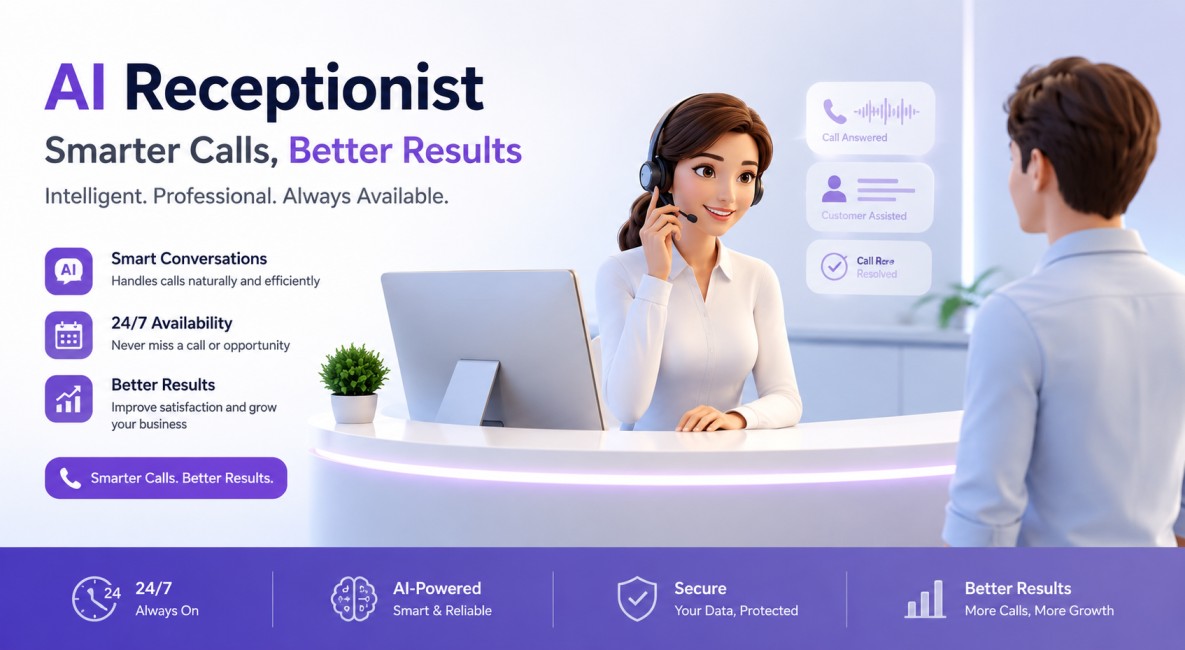
AI-powered communication solutions are transforming how businesses manage customer interactions. Through intelligent automation, voice recognition, and machine learning technologies, AI receptionists can answer calls, route inquiries, schedule appointments, and provide support without human intervention. Solutions such as the AI Call Assistant and automated AI Phone Call systems enable businesses to streamline operations while improving customer satisfaction.
According to many AI Receptionist Reviews, organizations that implement AI-driven communication systems often experience improved efficiency, reduced operational costs, and enhanced customer experiences.
Understanding AI Receptionist Systems
How AI Receptionist Systems Work
An AI Receptionist combines artificial intelligence, speech recognition, and automation technologies to manage customer communications effectively.
When a customer places an AI Phone Call, the system listens to the conversation, converts speech into text, analyzes customer intent, and generates appropriate responses. Unlike traditional automated systems that rely on fixed menus, AI receptionists can understand natural language and engage in dynamic conversations.
AI Call Assistant and Automated Voice Systems
An AI Call Assistant serves as the core communication engine behind many AI receptionist systems.
Automated voice systems can answer incoming calls, respond to customer inquiries, provide business information, schedule appointments, process requests, and transfer calls when necessary.
Integration with Business Communication Platforms
One of the most valuable features of AI receptionist systems is their ability to integrate with existing communication platforms.
Modern AI solutions connect with CRM software, helpdesk systems, cloud communication platforms, scheduling tools, and enterprise applications. This integration allows businesses to centralize customer information and automate workflows across multiple departments.
Core Technologies Behind AI Receptionist Systems
Natural Language Processing (NLP)
Natural Language Processing (NLP) enables AI systems to understand and interpret human language.
NLP allows an AI Receptionist to analyze customer requests, identify intent, and respond naturally during conversations. This technology makes interactions feel more human and improves communication effectiveness.
Machine Learning and Predictive Analytics
Machine learning helps AI systems continuously improve their performance.
By analyzing customer interactions and communication patterns, AI systems can identify trends and predict customer needs. Predictive analytics allows businesses to anticipate service demands, optimize support strategies, and improve operational efficiency.
Voice Recognition and Security Systems
Voice recognition technology adds an additional layer of intelligence and security to AI-powered communication systems.
AI receptionists can use voice biometrics to authenticate customers and verify identities during conversations. This improves security while creating more personalized support experiences.
Cloud-Based Communication Infrastructure
Cloud technology serves as the foundation of modern AI receptionist systems.
Cloud-based communication infrastructure allows businesses to access AI-powered services from any location while maintaining centralized management and data synchronization.
Key Features of AI Receptionist Systems
Intelligent Call Answering
A key capability of an AI receptionist is intelligent call answering.
AI systems can respond instantly ,so waiting time drops, and customers get help right away. Instead of sending callers through confusing phone mazes, people can speak naturally and get support without delay.
Automated Call Routing
Automated call routing directs incoming calls to the right team ,or to the best available representative match.
The system reviews customer intent, any prior conversation history, and service requirements before deciding where the call should go. This usually means fewer unnecessary transfers, so the caller reaches the right place sooner, without getting bounced around internal handoffs all day.
AI Phone Call Management
AI Phone Call management allows businesses to automate many routine communication tasks.
These tasks include appointment scheduling, order updates, service notifications, follow-up calls, and customer support inquiries. With assistance from an AI Call Assistant, organizations can manage large call volumes efficiently while maintaining high service standards.
Benefits of AI Receptionist Systems for Businesses
Enhanced Customer Experience
Customer experience is a major factor influencing business success.
An AI Receptionist improves customer experiences by providing instant support, accurate information, and personalized communication. Customers no longer need to wait for business hours or remain on hold for extended periods.
Increased Productivity and Efficiency
AI-powered communication systems automate repetitive tasks that would otherwise require human intervention.
Employees spend less time answering routine inquiries and more time focusing on complex customer issues and strategic activities. This improves productivity and enables businesses to operate more efficiently.
24/7 Customer Communication Support
Unlike human teams, AI receptionists can operate continuously without interruptions.
Customers can access support at any time, including evenings, weekends, and holidays. Continuous availability improves customer satisfaction and ensures that important inquiries are addressed promptly.
Scalability for Business Growth
AI receptionist systems can easily scale to handle higher call volumes and more customer interactions without requiring significant staffing increases. This scalability allows organizations to support growth while maintaining service quality.
Industry Applications of AI Receptionist Systems
Banking and Financial Services
Banks and financial institutions use AI receptionists to manage customer inquiries, account support, transaction updates, and fraud alerts.
Voice authentication technologies improve security while providing customers with fast and convenient service experiences.
Healthcare and Medical Support
Healthcare providers use AI receptionist systems to schedule appointments, send reminders, answer patient inquiries, and provide medical information.
Automation reduces administrative workloads while improving patient communication and engagement.
Retail and E-commerce
Retail businesses rely on AI receptionists to manage customer support, order tracking, product inquiries, and return requests.
Automated communication systems improve response times and enhance the overall shopping experience.
Challenges in Implementing AI Receptionist Systems
Integration with Existing Systems
Integrating AI solutions with existing business systems can be challenging.
Organizations may need to update infrastructure, migrate data, and ensure compatibility with communication platforms and software applications.
Data Privacy and Security Concerns
AI receptionist systems process large amounts of customer information.
Businesses must implement strong security measures to protect sensitive data and comply with regulatory requirements. Encryption, access controls, and cybersecurity monitoring are critical components of a secure AI communication environment.
Accuracy and Language Limitations
Although AI technology continues to improve, some systems may still encounter challenges when processing accents, dialects, or complex conversational requests.
Continuous training and optimization help improve accuracy, but businesses should monitor system performance regularly to ensure high-quality customer interactions.
Future Trends in AI Receptionist Technology
Advanced Conversational AI
Future AI receptionist systems will deliver even more natural and intelligent conversations.
Advances in conversational AI will enable systems to understand context more accurately, maintain longer conversations, and provide highly relevant responses.
Emotion Recognition in Voice Systems
Emotion recognition technology will allow AI systems to analyze customer emotions during conversations.
By detecting frustration, satisfaction, or urgency, AI receptionists can adjust responses accordingly and provide more empathetic support experiences.
Hyper-Personalized Customer Communication
Future AI systems will use customer data, preferences, and behavioral insights to deliver highly personalized communication experiences.
Personalized interactions can improve engagement, strengthen relationships, and increase customer loyalty.
Autonomous AI Call Management Systems
The next generation of AI receptionists will manage entire communication workflows independently.
These systems will handle customer inquiries, scheduling, follow-ups, support requests, and operational tasks with minimal human involvement.
Conclusion
The AI receptionist is shifting how businesses communicate, enabling smarter calls and better outcomes through more capable artificial intelligence. Choices like an AI Call Assistant, plus automated AI phone calling systems help companies elevate customer experiences, boost productivity, and streamline communication operations in a cleaner, more organized direction.
Also, as a few AI Receptionist Reviews point out, AI-driven communication platforms deliver real value: 24/7 help, better efficiency, scalable growth paths, and more personal customer engagement.